
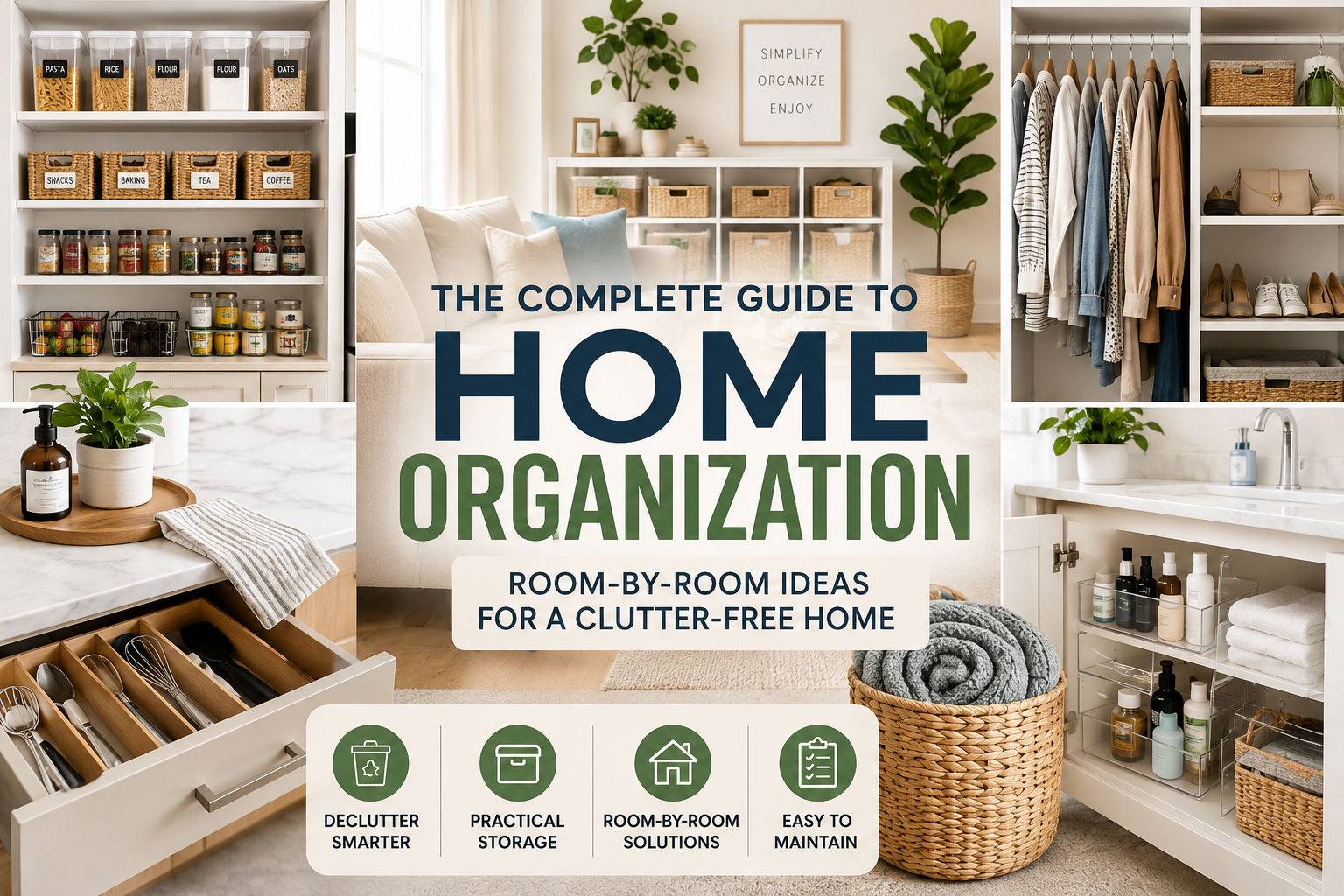
A well-organized home doesn’t require expensive furniture, a large house, or perfectly matching storage containers. It starts with understanding what you own, deciding what you actually use, and giving the things you keep a practical place to live.
If your kitchen counters are constantly crowded, your closet is difficult to manage, or you’re tired of searching for everyday items, the solution isn’t always more storage. Sometimes the better answer is less clutter and a simpler system.
This guide explains how to approach home organization room by room, from decluttering and storage to maintenance routines. You’ll also find practical ideas for small spaces, common mistakes to avoid, and a simple plan for keeping your home organized after the initial work is finished.
The goal of home organization isn’t perfection. It’s creating a home that works better for the people who live in it.
What Is Home Organization?
Home organization is the process of arranging belongings and living spaces so that items are easier to find, use, store, and maintain.
A useful organization system should answer three basic questions:
- What belongs here?
- Where should it go?
- How easily can it be put away?
The third question is often overlooked. A storage system may look excellent when everything is perfectly arranged, but if putting something away requires several steps, the system may not last.
Good organization combines function, accessibility, available space, and everyday habits.
Why Organizing Your Home Matters
Home organization can make ordinary routines easier. When belongings are grouped logically and frequently used items have consistent locations, you may spend less time searching, moving things around, or clearing surfaces before you can use them.
- Find everyday items more easily
- Make better use of existing storage
- Keep frequently used surfaces clearer
- Reduce duplicate purchases
- Make cleaning and resetting easier
- Create more functional rooms
- Reduce unnecessary visual clutter
- Establish routines that are easier to maintain
You don’t need to organize your entire home in one weekend. A better approach is to work in small, manageable zones.
Start With Decluttering Before Buying Storage
One of the most common organization mistakes is buying containers before deciding what needs to be stored.
If you have more belongings than you realistically use, adding storage can simply give clutter more places to hide.
Choose one small area:
- One drawer
- One shelf
- One cabinet
- One section of a closet
- One bathroom counter
- One pantry category
Ask yourself:
- Do I use this?
- Does it belong here?
- Is it still useful?
- Do I own duplicates?
- Would another location make more sense?
- Is it broken, expired, damaged, or unusable?
A Simple Four-Category Decluttering Method
1. Keep
Keep items that you regularly use, genuinely need, or have a clear purpose.
2. Donate
Consider donating usable items you no longer need, provided they are appropriate to donate and accepted by the organization you choose.
3. Recycle
Items made from recyclable materials may be suitable for recycling depending on your local recycling rules.
4. Discard
Dispose of items that are broken, unusable, expired, or otherwise unsuitable for keeping or donating.
For electronics, batteries, chemicals, and other special materials, follow appropriate local disposal requirements rather than placing them automatically in household waste.
Organize Your Home According to How You Live
Before deciding where something should go, think about how you use it.
Instead of organizing purely by appearance, organize according to:
- Frequency of use
- Location of use
- Household routines
- Accessibility
- Available storage
A Practical Storage Hierarchy
- Daily-use items: easiest to reach
- Weekly-use items: accessible but not necessarily in prime space
- Occasional-use items: higher shelves or less-used storage
- Rarely used items: consider whether they need to be kept
Kitchen Organization
The kitchen is one of the busiest rooms in many homes, so organization should focus on workflow.
Instead of placing items wherever there is empty space, create simple zones.
Create Kitchen Zones
- Cooking zone
- Food preparation zone
- Food storage zone
- Cleaning zone
- Beverage or breakfast zone
Cooking Zone
Consider keeping commonly used:
- Pots and pans
- Cooking utensils
- Spices
- Heat-resistant accessories
Food Preparation Zone
Consider keeping:
- Cutting boards
- Knives
- Mixing bowls
- Measuring tools
- Preparation utensils
Cleaning Zone
Group:
- Dishwashing supplies
- Sponges
- Cleaning cloths
- Appropriate cleaning products
Always store cleaning products according to their labels and keep them away from food.
Pantry Organization
A pantry becomes easier to maintain when similar foods have designated areas.
Possible categories include:
- Grains
- Pasta
- Breakfast foods
- Snacks
- Baking ingredients
- Canned foods
- Spices
- Cooking ingredients
- Frequently used staples
You don’t necessarily need identical containers for everything. Use containers where they genuinely improve visibility, accessibility, or storage.
Keep Frequently Used Foods Accessible
Items used every day should not be buried behind products you rarely use.
Label Consistently
Labels can be particularly useful when multiple people share the kitchen, containers look similar, or food is transferred from original packaging.
Always retain important product information and follow appropriate food-storage guidance.
Refrigerator Organization
A refrigerator is easier to manage when foods are grouped logically.
You might create areas for:
- Ready-to-eat foods
- Dairy products
- Produce
- Condiments
- Drinks
- Frequently used ingredients
Don’t overcrowd the refrigerator. Keeping some visual space makes it easier to see what you already have and identify items that need attention.
Regularly check dates and follow the storage instructions provided on food packaging.
Bathroom Organization
Bathrooms often contain many small products, making them easy to clutter. Start by separating products into simple categories so everyday items are easier to find and return to their proper places.
Everyday Products
Keep frequently used items within easy reach. This might include the products you use as part of your normal morning or evening routine.
Backup Products
Store unopened extras together rather than mixing them with products you use every day. This makes it easier to see what you already have before buying more.
Personal-Care Items
Drawers, trays, bins, or other suitable organizers can help group similar items and prevent products from spreading across the countertop.
Cleaning Products
Store cleaning products appropriately and follow the instructions on their labels. Keep cleaning products separate from personal-care products where necessary.
Keep the Counter Simple
The countertop should primarily hold items that are used frequently.
Everything else can have a designated storage location inside a suitable cabinet, drawer, or other storage area.
Bedroom Organization
A bedroom should support rest rather than become a general storage area. Start by identifying the belongings that genuinely need to remain in the room.
Common areas to organize include:
- Clothing
- Shoes
- Bedside tables
- Dressers
- Wardrobes
- Under-bed storage
- Accessories
Remove items that belong in other rooms and return them to their proper locations.
A Simple Evening Reset
- Put clothing where it belongs.
- Return books and accessories to their designated locations.
- Clear unnecessary items from bedside surfaces.
- Return items that have migrated into the bedroom.
A few minutes of resetting can prevent small amounts of clutter from becoming a larger weekend project.
Closet Organization
Closet organization becomes easier when clothing is grouped consistently. There is no single arrangement that works for every household, so choose a system that makes sense for your routine.
You can organize clothing by:
- Clothing type
- Season
- Frequency of use
- Household preference
- Color, if that genuinely helps you
Everyday Clothing
Keep frequently worn clothing in the easiest-to-reach section of the closet.
Occasional Clothing
Formal or less frequently worn clothing can be stored in less accessible areas when practical.
Seasonal Clothing
If seasonal rotation makes sense for your household, move less frequently used clothing to appropriate secondary storage when the season changes.
Don’t fill every inch of the closet. Leave enough room to remove and return clothing without creating a chain reaction.
Shoe Organization
Shoes often create clutter near entrances, bedrooms, and wardrobes. Start by deciding which pairs need to remain easily accessible.
Possible storage solutions include:
- Shoe racks
- Shelving
- Shoe cabinets
- Storage benches
- Designated closet areas
The best option depends on your available space, household size, and how frequently different shoes are used.
Keep everyday shoes accessible while storing occasional footwear elsewhere when practical.
Living Room Organization
The living room often becomes a temporary storage location for items from throughout the home. Creating designated locations for common items can make the room easier to reset.
Consider creating specific places for:
- Remote controls
- Books
- Blankets
- Toys
- Chargers
- Magazines
- Small electronics
A basket can be useful for collecting items that need to be returned to another room, but avoid allowing the basket itself to become permanent storage.
Try a Five-Minute Evening Reset
- Clear the main surfaces.
- Return items to their appropriate rooms.
- Fold or store blankets.
- Put away toys.
- Return remotes to their designated location.
Small resets can make the next morning easier without requiring a large cleaning session.
Home Office Organization
A home office should make it easy to find the things you use regularly. Keep the system simple enough that documents and supplies can be returned to their places after use.
Active Work
Keep materials related to current projects within convenient reach.
Reference Materials
Store documents and resources that you may need occasionally but don’t require every day.
Archived Materials
Important information that isn’t needed regularly can be stored separately from active work.
For stationery, group similar supplies together rather than spreading them across multiple drawers.
Cable organization is also worth considering. Avoid creating a box filled with unidentified wires. Labeling cables can make future troubleshooting much easier.
Digital organization matters too. A straightforward folder structure can help prevent important documents from becoming scattered across devices.
Entryway Organization
The entryway is one of the most important areas to organize because it supports the transition between leaving and returning home.
Consider creating designated locations for:
- Keys
- Shoes
- Bags
- Umbrellas
- Everyday accessories
- Frequently used outerwear
A small tray or suitable wall-mounted solution can give keys a consistent home.
You should know where important everyday items are before you need to leave.
Laundry Area Organization
Keep laundry supplies grouped by purpose so that frequently used products are easier to find.
Common categories include:
- Detergent
- Stain-treatment products
- Fabric-care products
- Laundry accessories
- Cleaning cloths
Avoid placing too many items around appliances. Keep the area accessible and follow product labels for storage requirements.
Potentially hazardous products should be stored appropriately and kept away from children and pets.
A small laundry area doesn’t need a complicated system. Clear categories and convenient storage can be enough.
Small-Space Organization
Small homes require careful decisions because every storage area matters. Instead of focusing only on adding more containers, look for opportunities to use the space you already have more effectively.
Use Vertical Space
Suitable shelving can help take advantage of unused wall height where appropriate.
Use Doors
Over-door organizers can provide additional storage in some rooms, provided the door can support the organizer and still close properly.
Use Under-Bed Space
Under-bed storage can be useful for suitable items that aren’t needed every day.
Choose Multifunctional Furniture
Furniture that serves more than one purpose can be helpful in compact rooms, especially when storage space is limited.
Keep Surfaces Clear
Open surfaces can quickly make a small room feel crowded. Store items that don’t need to remain visible.
Before bringing something new into the home, decide where it will live.
Smart Storage Solutions
Storage products can be useful, but the right product depends on the problem you’re trying to solve.
Clear Containers
Clear containers can be useful when visibility matters. They can make it easier to identify stored items without opening multiple boxes.
Drawer Dividers
Drawer dividers can help separate smaller items such as utensils, accessories, office supplies, and personal belongings.
Shelf Risers
Shelf risers can create additional vertical levels inside suitable cabinets and help make better use of available height.
Baskets
Baskets can group similar items and provide a simple way to collect loose belongings.
Hooks
Hooks can make use of suitable wall or door space. Make sure the mounting method and surface are appropriate for the intended load.
Rolling Carts
Rolling carts can be useful when supplies need to move between areas. They’re particularly helpful for items used in more than one location.
Stackable Containers
Stackable containers can make better use of vertical storage when they remain stable and the contents can still be accessed conveniently.
How to Choose the Right Storage Container
A storage product can be useful and still be completely wrong for your space. Think about the actual storage problem before making a purchase.
What Are You Storing?
Small accessories require different storage from blankets, kitchen ingredients, or cleaning supplies.
How Often Will You Access It?
Daily-use items need convenient access. Items used occasionally can generally be stored in less accessible areas.
Do You Need Visibility?
Clear storage may be helpful when you frequently need to identify the contents.
Can You Lift It Comfortably?
Large containers can become difficult to handle when filled. Consider the weight and location before choosing a large storage box.
Can It Fit the Available Space?
Measure the actual storage area before purchasing. Check width, depth, height, doors, drawers, and available clearance.
Is Labeling Necessary?
Labels can improve consistency, especially when several similar containers are used or when multiple people share the storage system.
Measure Before You Buy
A simple habit can prevent many unnecessary purchases:
Measure twice, buy once.
Check the width, depth, and height of the available space and compare those measurements with the actual dimensions of the storage product.
Common Home Organization Mistakes
Even a well-planned organization project can become difficult to maintain if the system doesn’t match the way the household actually lives.
Buying Too Many Organizers
More containers don’t automatically mean better organization. Buying storage products before decluttering can sometimes create additional clutter.
Better approach: Declutter first, identify the actual storage problem, and then decide whether an organizer is necessary.
Organizing Only for Appearance
A beautifully arranged space may look impressive, but if it is difficult to use, the system may not last.
Better approach: Prioritize accessibility and everyday function over appearance alone.
Creating Too Many Categories
If every small item has its own category, putting things away can become unnecessarily complicated.
Better approach: Use broad, logical categories that are easy for everyone in the household to understand.
Ignoring Household Habits
An organization system that works for one person may not work for an entire family.
Better approach: Build storage systems around actual household routines and where items are naturally used.
Trying to Finish Everything in One Day
Large organization projects can quickly become exhausting and difficult to complete.
Better approach: Work in small zones and finish one manageable area before moving to another.
Keeping Too Much “Just in Case”
Some belongings are useful to keep for future needs, but excessive “just in case” storage can consume valuable space.
Ask yourself whether an item has a realistic future purpose and whether keeping it is worth the storage space it occupies.
How to Maintain an Organized Home
Organizing your home once isn’t enough. The real goal is creating systems that are simple enough to maintain.
When frequently used belongings have designated homes, returning them after use becomes easier.
Daily Reset
Spend a few minutes returning commonly used items to their designated locations.
Weekly Reset
Choose one area that needs attention. It might be the pantry, bathroom cabinet, closet, desk, or entryway.
Monthly Review
Look for areas where clutter is returning.
- Why is this area becoming cluttered?
- Is the storage location inconvenient?
- Are there too many items?
- Does the category need to be simplified?
The answer may reveal that the organization system itself needs changing.
Seasonal Review
Depending on your household, a seasonal review can be useful for clothing, decorations, storage areas, and other belongings that aren’t used throughout the year.
Create a Simple Home Organization Routine
A maintenance routine doesn’t need to be complicated. The most useful routine is one that fits naturally into your household schedule.
Daily
Spend approximately 5–10 minutes returning everyday items to their designated locations.
Weekly
Spend a little time resetting one or two areas that tend to become cluttered.
Monthly
Review problem areas and decide whether the existing organization system is still working.
Seasonally
Review clothing, decorations, storage areas, and other seasonal belongings when appropriate for your household.
A Simple 30-Day Home Organization Plan
If your home feels overwhelming, a gradual approach can make the process easier. You don’t need to complete every task exactly as written. Adjust the schedule according to the size of your home and your available time.
Week 1: Declutter
- Day 1: Entryway
- Day 2: One kitchen drawer
- Day 3: Bathroom counter
- Day 4: Bedroom surface
- Day 5: Closet section
- Day 6: Living room surface
- Day 7: Review and reset
Week 2: Kitchen
- Day 8: Pantry
- Day 9: Refrigerator
- Day 10: Kitchen cabinets
- Day 11: Spices
- Day 12: Cooking tools
- Day 13: Food storage
- Day 14: Kitchen reset
Week 3: Bedrooms and Living Areas
- Day 15: Wardrobe
- Day 16: Shoes
- Day 17: Bedside storage
- Day 18: Living room storage
- Day 19: Books
- Day 20: Cables and electronics
- Day 21: Reset
Week 4: Whole-Home Review
- Day 22: Bathroom storage
- Day 23: Laundry area
- Day 24: Home office
- Day 25: Entryway
- Day 26: Storage area
- Day 27: Donation and recycling review
- Day 28: Cleaning supplies
- Day 29: Problem areas
- Day 30: Create your maintenance routine
You don’t have to follow this schedule exactly. If a particular area needs more time, give it more time.
A Better Way to Organize: Think in Zones
One useful way to approach organization is to think in zones rather than individual objects.
Instead of finding a completely separate location for every kitchen item, create a cooking zone. Instead of scattering office supplies throughout a room, create a dedicated work-supply zone.
This makes organization decisions easier.
Kitchen Zones
- Cooking zone
- Food preparation zone
- Food storage zone
- Cleaning zone
Bathroom Zones
- Daily-care zone
- Backup-products zone
- Cleaning zone
Office Zones
- Active-work zone
- Stationery zone
- Document zone
Entryway Zones
- Shoe area
- Key area
- Bag area
- Outerwear area
The exact zones should reflect how your household actually uses each room.
When You Shouldn’t Buy Another Storage Product
Before purchasing another organizer, ask yourself:
- Can I remove items I don’t need?
- Can I relocate items to a more appropriate room?
- Can I use existing shelves more effectively?
- Can I group similar items?
- Is the problem actually a lack of storage?
- Would changing the routine solve the problem?
Sometimes the most effective organization solution costs nothing.
How to Make Organization Easier for the Whole Family
A home organization system shouldn’t depend on one person remembering where everything belongs.
Make categories simple and use labels where they genuinely help. Keep frequently used items accessible and make sure other household members can understand the system.
Most importantly, don’t create a system that only makes sense to you.
If everyone can understand where things belong, maintaining the system becomes easier.
What to Do When Your Organization System Stops Working
An organization system isn’t permanent. Your household changes, and your storage needs can change with it.
You may:
- Move to a different home
- Add or remove furniture
- Change your daily routines
- Have children
- Start working from home
- Buy different products
- Need different storage
If a system repeatedly fails, don’t simply reorganize everything in the same way again.
Why does this system keep failing?
Maybe the items are too far from where they’re used. Maybe the container is difficult to access. Maybe there are too many belongings. Or perhaps the category is unnecessarily complicated.
Fixing the reason behind the problem is usually more useful than repeatedly tidying the symptoms.
Frequently Asked Questions
What is the best way to start organizing your home?
Start with one small area, remove unnecessary items, group similar belongings, and assign each category a practical location. Add storage only after identifying what you actually need to store.
Should I buy storage containers before decluttering?
Usually, it’s better to declutter and measure your available space first. This helps prevent buying organizers that you don’t actually need or that don’t fit.
How can I organize a small home?
Use available vertical space, suitable under-bed storage, multifunctional furniture, door storage, and simple storage categories. Most importantly, avoid keeping things you don’t actually need.
How do I keep my home organized?
Give commonly used items designated locations and spend a few minutes each day returning things to those locations. Periodically review areas where clutter repeatedly returns.
Are expensive organizers necessary?
No. Effective organization depends more on sensible categories and convenient storage locations than on buying expensive products.
How often should I declutter my home?
There’s no single schedule that works for everyone. A small monthly review and a more thorough seasonal review can be a practical starting point.
Final Takeaway
A more organized home doesn’t start with buying more storage.
It starts with understanding what you own, deciding what deserves your available space, and creating simple systems around the way you actually live.
Start with one drawer. Then one cabinet. Then one room.
As you make small improvements, pay attention to what works and what doesn’t. The best organization systems are not necessarily the most complicated or visually perfect. They’re the ones that make everyday life easier and can be maintained without constant effort.
At MyHomeLush, the goal is to provide practical home organization, storage, cleaning, kitchen, décor, and improvement ideas that readers can realistically use in their own homes.
Your home doesn’t have to be perfect. It just needs to work better for you.
A Note About Product Recommendations
MyHomeLush may recommend home organization and storage products when they are relevant to an article. Product recommendations should be based on practical usefulness, available information, features, and suitability for the reader’s needs.
Some links may be affiliate links, which means MyHomeLush may earn a commission from qualifying purchases at no additional cost to the reader. Affiliate relationships are disclosed transparently.
About MyHomeLush
MyHomeLush is a home-focused publication covering practical home organization, storage solutions, cleaning, kitchen organization, home décor, home improvement, and useful home products.
Our goal is to provide clear, useful information that helps homeowners, renters, and families make practical decisions for their living spaces.
Learn more about the person behind MyHomeLush on our About Mohammed Absar page.
Leave a Reply